Saturday, 20 October 2012

Japanese illustrations

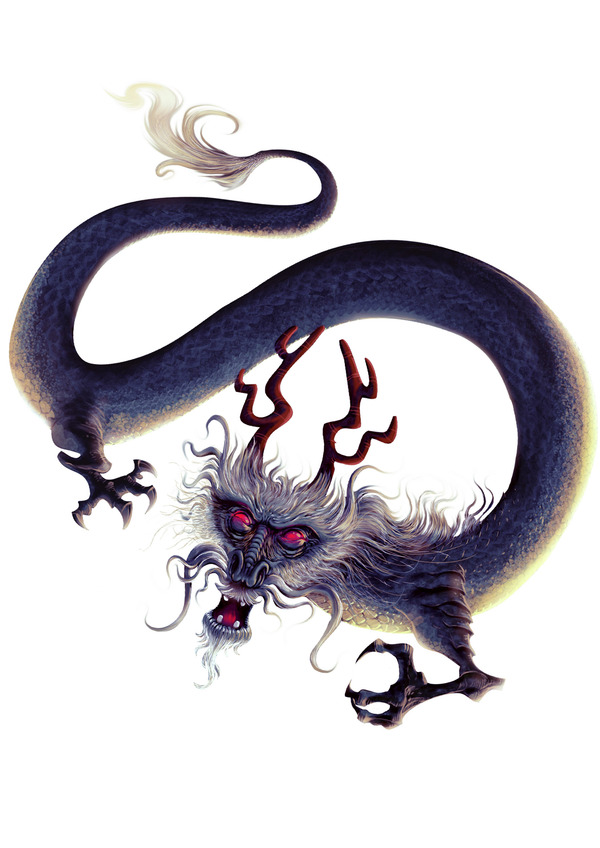
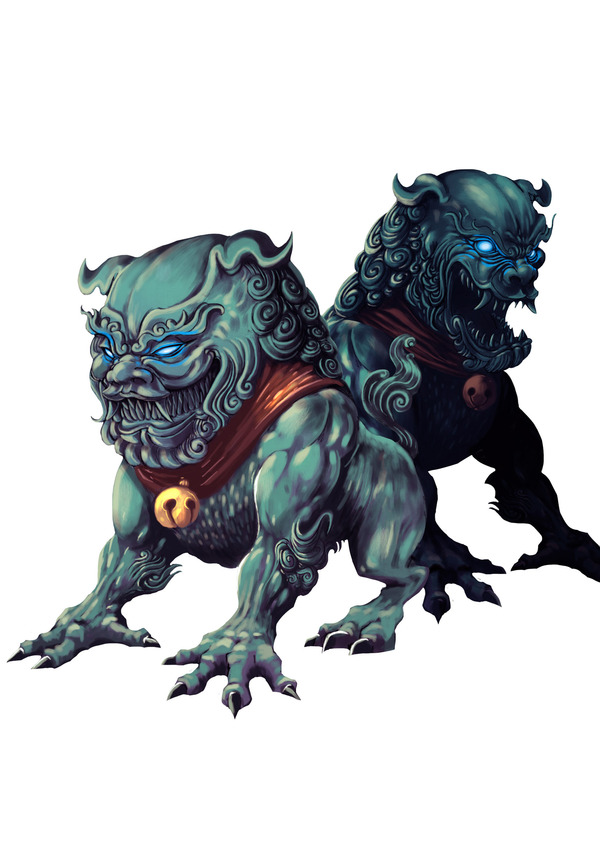
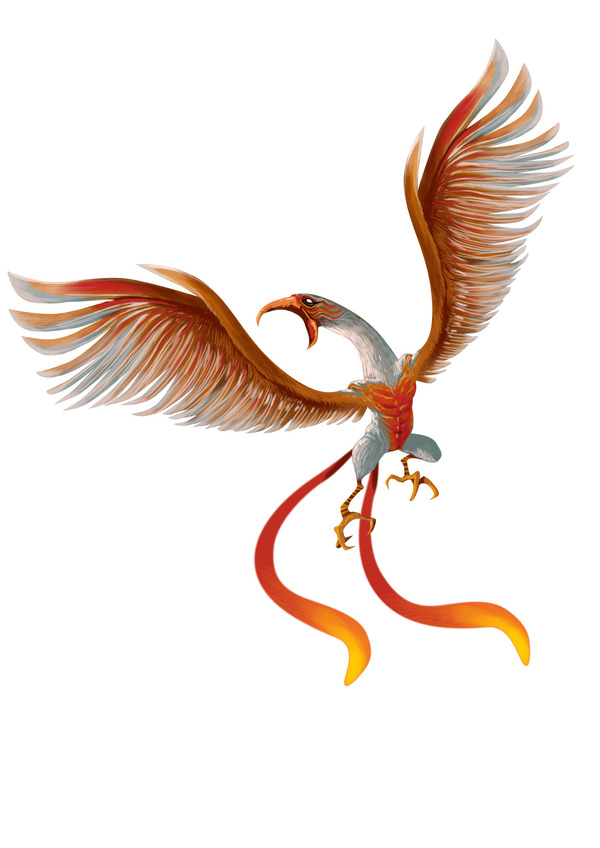
Some interesting illustrations of creatures influenced by Japanese culture. Quite a bit different from my own illustrative style, they focus a lot more on texture and light, whereas I tend to use line work. These are an interesting take on Japanese folk lore, but I don't necessarily think they reflect the traditional Japanese style as much .

Komainu

Baku

Houou

Dragoes

Namazu

Nue


Thursday, 18 October 2012

Amaterasu Omikami 天照大神

I have chosen five final Kami to look at and research in more depth for the sake of this brief. I want to collect as much context for each one as possible, so that my illustrations will be informed and accurate.

Amaterasu Omikami 天照大神
As Amaterasu is the godess of the sun and universe and the most known deity of Japanese mythology, I thought it essential to include her in my final illustrations. Her name derived from 'Amateru' which means 'shining in heaven'. The meaning of her full name Amaterasu-ōmikami means 'The great August Kami who shines in heaven'. The emperor of Japan is said to be a direct descendant of Amaterasu. 

She is the sister of Susanoo, god of sea and storms, and Tsukuyomi, god of the moon. All three were born from Izanagi (the first man). Amaterasu labelled her brother and husband, Tsukuyomi as evil after he killed the godess of food, Uke Mochi, which separated night from day/ sun from moon. 

Amaterasu fell out with Susanoo after she challenged him to prove his sincerity, and there were differences in opinion on the winner. So he went on a rampage and destroyed her rice fields. In reaction to this, she hid from him in a 'heavenly rock cave' Iwayato, which hid the sun for a long period of time. Susanoo was punished by being banished from heaven which is called Takamagahara, but they later reconciled when he gave her the Kusanagi-no-Tsurugi sword. 

The Ise Shrine located in Honshū, Japan houses the inner shrine, Naiku dedicated to Amaterasu. Her sacred mirror, Yata no Kagami is said to be kept at this shrine as one of the Imperial Regalia of Japan. As part of the Shinto faith, a ceremony known as Shikinen Sengu is held every 20 years to honor Amaterasu.

To worship just Amaterasu, excluding all other Kami is known as 'the cult of the sun'.

Amaterasu is played by Kyōko Fukada in the film Onmyoji II, which also includes a Yamata-no-Orochi, an eight headed, eight tailed serpent/ dragon like creature. 


Susanoo slaying the Yamata-no-Orochi by Utagawa Kunitero 歌川国輝 (1808-1876). http://en.wikipedia.org/wiki/File:Kuniteru_Gozu_dragon.jpg

In the 2006 video game Okami, Amaterasu is depicted as a white wolf with red markings, although this is not true to the traditional Shinto faith.

Deviant art of Lady Amaterasu in the Okami video game.


More Kami

I have found some more of the major Kami of the Shinto belief. I found that not all of the previous ones that I tried researching had very much information concerning their image, which is vital if I am going to be producing illustrations.

Fujin 風神
God of wind and one of the oldest of the Shinto gods. Described as a terrifying red headed demon, carrying a bag of winds. In Japanese art he is often depicted with Raijin, god of lightning, thunder and storms. 

Ebisu 恵比須
God of fishermen, luck and workingmen, as well as the guardian of the health of small children. Associated with jellyfish, red bream and sea bass.

Raijin 雷神
God of lightning and thunder, often depicted with Fujin.

Tengu 天狗
A class of supernatural beings (best known as monster-spirits). Originally thought to take the forms of birds of prey, and have been depicted to have both human and avian characteristics. 

Yamata no Orochi 八岐の大蛇
An eight headed and eight tailed serpent/ dragon. 

Wednesday, 17 October 2012

Shinto Kami

I have researched into the most notable Kami of the Shinto faith. I have found ten, I would like to get them down to five, to produce five illustrations for posters and then applied to other promotional material. I will base this decision on both the relevance and the images I gather for each spiritual being.

Amaterasu Omikami 天照大神
Amaterasu is the goddess of the sun and also the universe and the Japanese emperor is said to be a direct descendant. Sister of Susanoo, god of storms and Tsukuyomi, god of the moon. Amaterasu is portrayed as a white wolf with red markings in the game 'Okami', although I have found that this a more recent development, and not true to the traditional belief.


Hachiman 八幡神
The god of archery and war, incorporating elements from both Shinto and Buddhism. The divine protector of Japan and the Japanese people. His symbolic animal and messenger is the dove.


Inari Okami 稲荷大神
Fertility, rice, agriculture, foxes, industry and worldly success. Sometimes represented as three or five individual Kami. Seen as male, female or androgynous, Inari's foxes or kitsune are pure white and act as his/her messengers.

Izanagi-no-mikoto/ Izanami-no-mikoto
The first man/ woman.

Kotoamatsukami 別天津神
The first Kami to come into being, consisting of three gods. Amenominakanushi 天御中主 (Central master), Takamimusubi (High creation), Kamimusubi (Divine creation).

Amenominakanushi

Omoikane 思兼 or 思金
A deity of wisdom or good council.

Suratahiko Okami 猿田毘古大神
Kami of earth.

Susanoo-no-mikoto 建速須佐之男命
God of seas and storms and brother to Amaterasu.

Tsukuyomi 月読
God of the moon, and other brother to Amaterasu. 

Shinto Folklore

I have been looking into Shinto folklore, which is the Japanese belief in spiritual beings and powers known as Kami. The most accurate western translation for Kami is spirits, and each Kami is related to a different natural force or power. Kami can also be elements of nature such as, mountains, lakes, rivers,   earthquakes or storms.

Overall the Shanti belief is very complex and many meanings can be withdrawn. As I explained before, some Kami can be described as the different elements and forces of nature, including ancestral spirits. Also, Kami are the guardian spirits of the land, occupations and skills. Kami spirits are not only superior beings to man, but can also be spirits that are considered pitiable or weak. Within modern Shinto, there are no clearly defined criteria for what be considered Kami.

The objects described as Kami are not symbols of the spirits, more abodes in which they reside.
The spirits worshipped in Shinto are always increasing in size, as said in the Japanese phrase Yaoyorozu no Kami 八百万神.. literally meaning 'the eight million Kami'. 


Although the ancient designations are still adhered to, in modern Shinto many priests also consider kami to be anthropomorphic spirits, with nobility and authority. These include such mythological figures as Amaterasu Omikami, the sun goddess of the Shinto pantheon. Although these kami can be considered deities, they are not necessarily considered omnipotent or omniscient, and like the Greek Gods, they had flawed personalities and were quite capable of ignoble acts. In the myths of Amaterasu, for example, she could see the events of the human world, but had to use divination rituals to see the future.


The ancestors of a particular family can also be worshiped as kami. In this sense, these kami were worshiped not because of their godly powers, but because of a distinct quality or value. These kami are regional and many shrines (hokora) have been built in their honour. In many cases, people who once lived can thus be deified as gods; an example of this is Tenjin, who was Sugawara no Michizane (845-903) in life. Within Shinto, it is believed that the nature of life is sacred because the kami began human life. Yet, man cannot perceive this divine nature, which the kami created, on his own; therefore, magokoro, or purification, is necessary in order to see the divine nature. This purification can only be granted by the kami. In order to please the kami and earn magokoro, Shinto followers are taught to uphold the four affirmations of Shinto.
The first affirmation is to hold onto tradition and the family. Family is seen as the main mechanism by which traditions are preserved. For instance, with marriages or births, traditions can be practiced repeatedly. The second affirmation is to have a love of nature. Nature objects are worshipped as sacred because the kami live within them. Therefore, to be in contact with nature means to be in contact with the gods. The third affirmation is to maintain physical cleanliness. Followers of Shinto take baths, wash their hands, and rinse out their mouths often. The last affirmation is to practice matsuri, which is the worship and honor given to the kami and the ancestral spirits.
Additionally, Shinto followers believe that the kami are the ones who can either grant blessings or curses to a person. Shinto believers desire to appease the evil kami to 'stay on their good side,' and also to please the good kami. Therefore, as the four affirmations are values that Shinto believers strive to practice daily, they also wear omamori to aid them in remaining pure and protected. Mamori are charms that keep the evil kami from striking a human with sickness or causing disaster to befall him.
The kami are both worshiped and respected within the religion of Shinto. The goal of life to Shinto believers is to obtain magokoro, a pure sincere heart, which can only be granted by the kami. As a result, Shinto followers are taught that humankind should venerate both the living and the nonliving, because both possess a divine superior spirit within, the kami.


http://www.onmarkproductions.com/html/shinto-deities.html
http://en.wikipedia.org/wiki/Kami#Shinto_belief

Harajuku

I have researched into the styles of Harajuku, which is a place in Japan that youths gather every Sunday, dressed in different styles and fashions of Japan.


Harajuku (原宿) in Japan refers to an area around Harajuku train station. Harajuku style is a japanese fashion adopted by the teenagers and young adults in the area and its side streets which have many boutiques, trendy stores and used clothes shops.
Japanese Harajuku Girls and Harajuku Style has been used to describe teens dressed in many fashion styles ranging from Gothic Lolita (also gothic loli) Visual Kei, Ganguro, Gyaru, Kogal, to "cute" Kawaii style clothing. 


harajuku girls
Young adults in Harajuku may also be dressed as anime or manga characters (known as cosplay).


The different styles of Harajuku...

Gothic Lolita


Visual Kei


Cosplay


Kawaii & Decora


Ganguro & Kogal


Tuesday, 16 October 2012

Can graphic design save the world?

I have come across an article on Computer Arts written by John Hudson. It's about our role as designers and how we should contribute to keeping a sustainable environment. One of the things i find most interesting about the article is the facts that are presented about the wastage produced by designers and printers, the numbers are staggering. If we are producing such wastage, it is only right that we justify it by trying to be as sustainable as possible, especially in the planets current condition.


Secondly, as designers we make and design ‘stuff’. We place things into the world, and it takes energy and resources to get them there, and sometimes the decisions we make in the creative process can have a direct impact on the society we live in. For example, £1 in every £3 of UK council tax is spent on the disposal of household waste, packaging, direct mail and designed ‘stuff’, with some councils spending more on waste management than on educational budgets. The print industry is still one of the world’s largest polluters, yet we mindlessly throw away 4.7 million tons of fresh, unused paper every year in the UK due to poor decision-making. Living on a planet with finite resources means we have to work smarter in the future.


Something else I came across in the article is Responsible Designer developed by Jon Hudson. It is an app that directs and informs designers on how to have a more sustainable and eco friendly practice. I tried to download it, but it's not available to iphone yet.. gutted!


The smartphone app offers a well-researched resource of responsible printing, inks, papers and processes. It also has an extensive reading list and links section, and showcases studios that have a responsible ethos, along with inspiring examples of their work. The app extends the learning environment outside of the studio and places key information into the hands of the students, which helps to inform their creative choices and processes.

http://www.computerarts.co.uk/features/can-graphic-design-save-world


 A studio based document has also been developed in the form of an A3 layout pad to help with the same issue, which is aimed more towards students as a learning aid.